Introduction
When people talk about SEO, most think about keywords, content, and website optimization. But ranking on Google is not just about what happens on your website — it’s also about what happens outside your website.
That’s where Off-Page SEO comes in.
In this blog, we’ll explain what Off-Page SEO is, why it matters, and how you can use it to improve your website’s authority and rankings.
What Is Off-Page SEO?
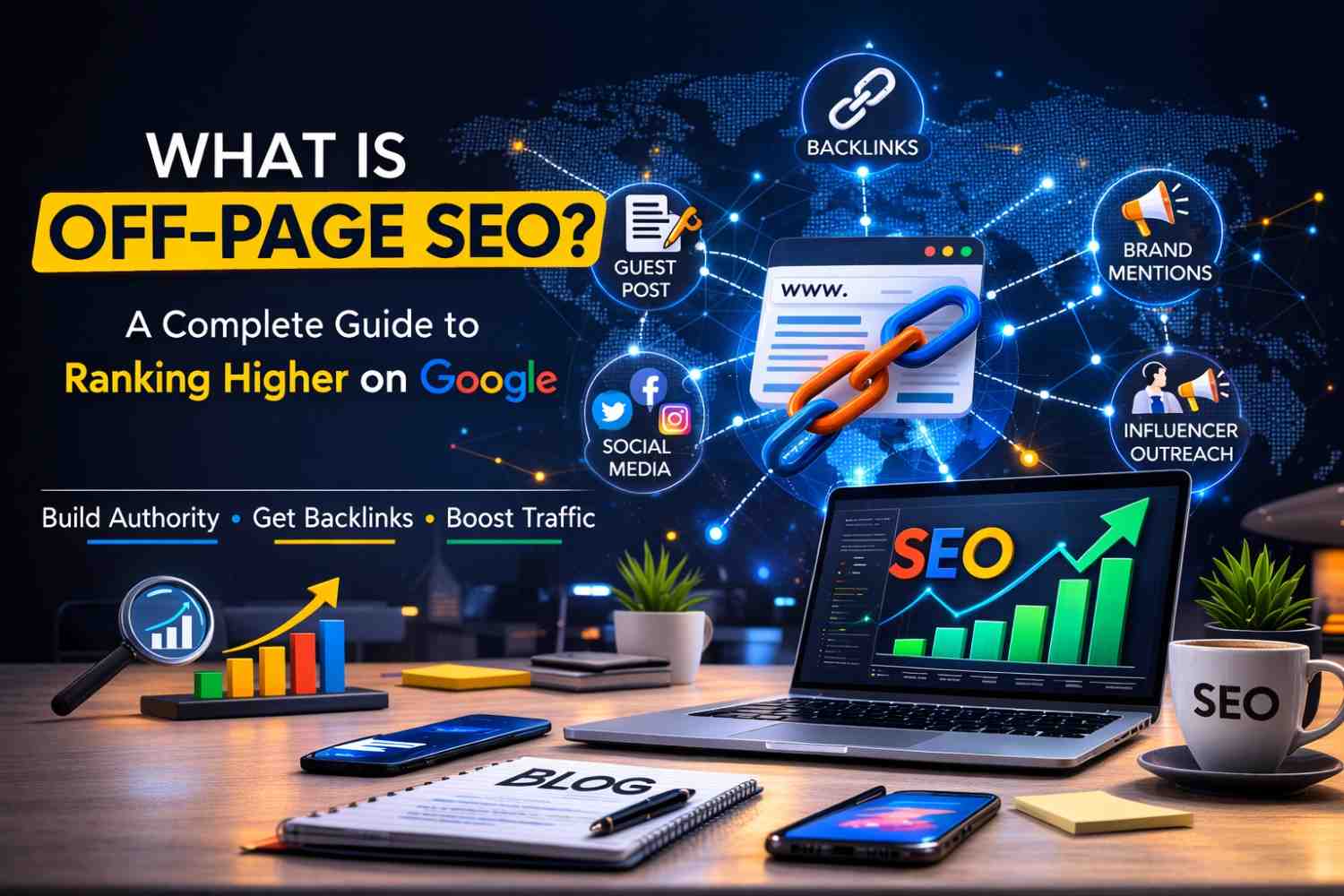
Off-Page SEO refers to all the actions taken outside your website to improve its search engine rankings.
Unlike On-Page SEO (which includes content, meta tags, internal linking, etc.), Off-Page SEO focuses on building your website’s authority, trust, and popularity through external sources.
The main goal of Off-Page SEO is to show search engines like Google that:
- Your website is trustworthy
- Your content is valuable
- Other websites recommend you
Why Is Off-Page SEO Important?
Search engines use backlinks and external signals to determine how trustworthy and authoritative your website is.
If many high-quality websites link to your site, Google sees it as a strong signal that your content is valuable.
Benefits of Off-Page SEO:
- Improves search engine rankings
- Increases domain authority
- Drives referral traffic
- Builds brand awareness
- Increases website credibility
Key Off-Page SEO Techniques
Here are the most effective Off-Page SEO strategies:
1. Backlink Building
Backlinks (also called inbound links) are links from other websites to your website.
High-quality backlinks from authoritative websites improve your rankings significantly.
Example:
If a popular marketing website links to your blog, Google considers your content valuable.
2. Guest Posting
Guest posting means writing content for other websites in your niche.
Benefits:
- Earn high-quality backlinks
- Reach a new audience
- Build authority in your industry
3. Social Media Marketing
Sharing your content on social media platforms increases visibility and traffic.
Although social links are usually no-follow, they help in:
- Brand awareness
- Content distribution
- Traffic generation
4. Brand Mentions
Even if a website mentions your brand without linking, it still helps build authority.
Search engines recognize brand signals as a trust factor.
5. Influencer Outreach
Collaborating with influencers helps you:
- Gain exposure
- Build credibility
- Earn natural backlinks
6. Forum & Community Participation
Engaging in forums like industry communities helps drive traffic and establish expertise.
(Always provide value — avoid spam links.)
Off-Page SEO vs On-Page SEO
| On-Page SEO | Off-Page SEO |
|---|---|
| Optimizing content | Building backlinks |
| Meta tags & headings | Guest blogging |
| Internal linking | Social sharing |
| Website speed | Brand mentions |
Both are equally important for ranking success.
Best Practices for Off-Page SEO
- Focus on quality over quantity
- Avoid spammy backlinks
- Build natural links
- Create high-quality shareable content
- Stay consistent
Conclusion
Off-Page SEO is essential for building your website’s authority and improving search engine rankings. While On-Page SEO optimizes your content, Off-Page SEO builds trust and credibility in the eyes of search engines.
If you want to rank higher on Google, you must invest time in building strong backlinks and promoting your brand outside your website.
Start building authority today — because SEO is not just about your website, it’s about your reputation across the internet.